Pipe Bursting
Full Sewer Lateral Replacement
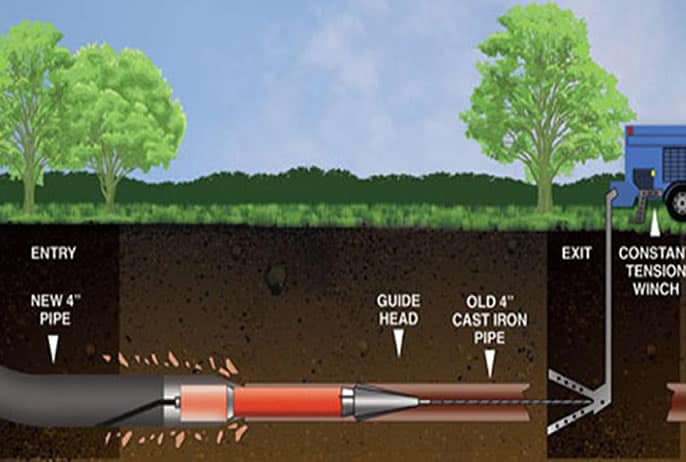
When we pipe-burst a sewer lateral, we use HDPE Pipe that comes in 40-ft sections and is connected by welding. This semi-flexible pipe is often used in gas and water mains. Most replacements have only one seam or connection, minimizing joints and reducing the likelihood of future problems.
How Pipe Bursting Works
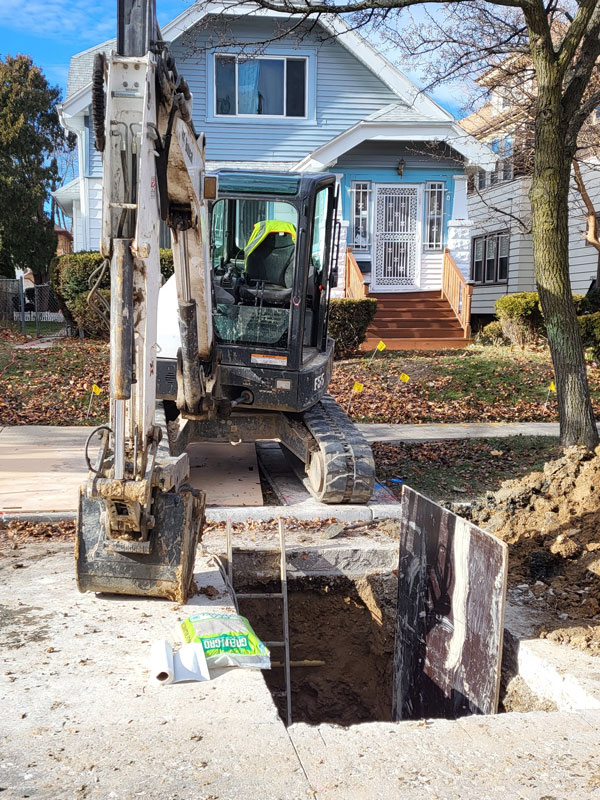
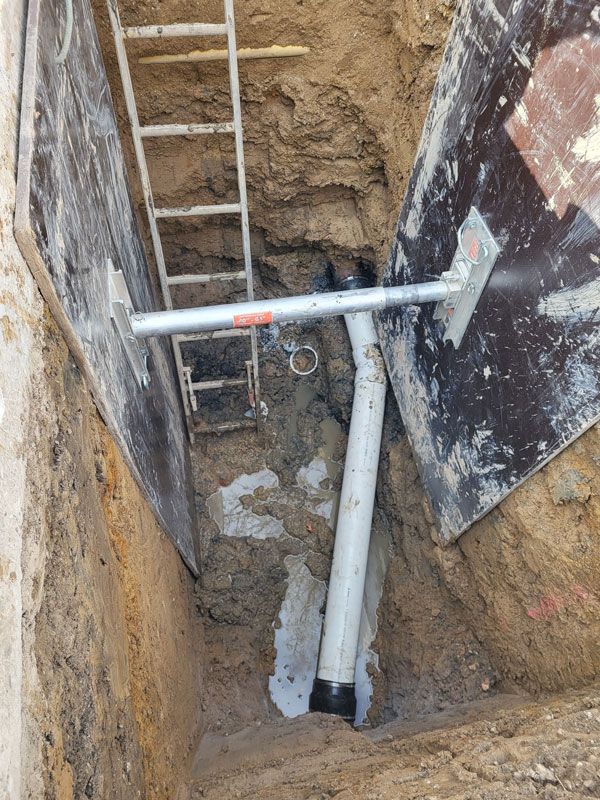
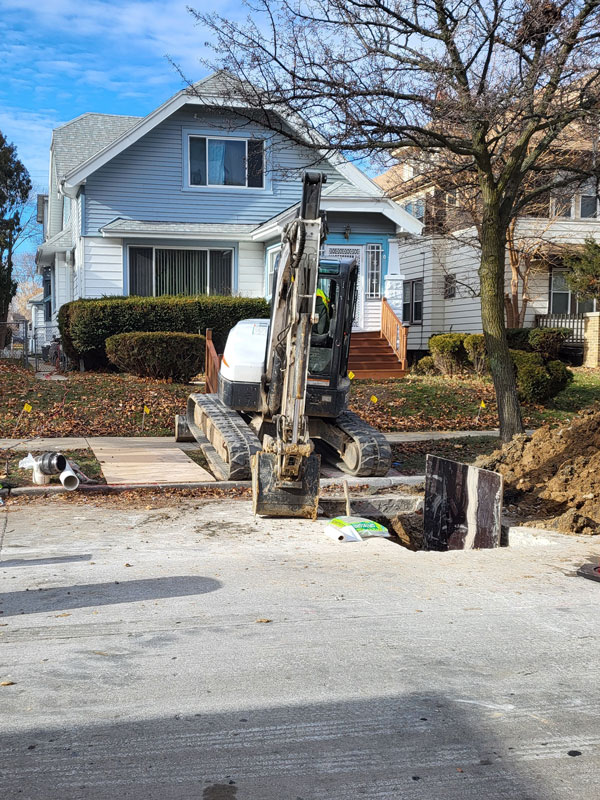
For a pipe burst, we excavate in the roadway near the main, then in the basement by the front wall, or sometimes outside at the front of the house. We then drop a 30-ton hydraulic press into the street trench, bring the HDPE pipe in through a window in the basement, and pull it from the basement to the sewer main with a 1-inch steel cable.
Pipe Bursting is a permanent solution to your sewer problems.
We offer same-day camera inspection and next-day sewer lateral repair!
Key Advantages of Pipe Bursting
- Complete Replacement: Pipe bursting replaces the old pipe with a new, durable one (often high-density polyethylene, or HDPE), effectively eliminating issues such as cracks, gaps, and deterioration. A liner, by contrast, creates a new pipe within the old one, which remains in the ground.
- Increased Flow Capacity: This is a major advantage. Pipe bursting can replace the old pipe with one of the same or larger diameter, enhancing the system’s hydraulic capacity and preventing future clogs. Pipe lining, because it adds a layer to the inside of the existing pipe, slightly reduces the diameter.
- Suitable for Severe Damage: Pipe bursting is a practical solution when the existing pipe is collapsed, is severely crushed, or is improperly graded, conditions that make a liner installation impossible.
- Destroys Obstructions: The bursting head physically breaks apart the old pipe and any obstructions, such as significant tree roots, ensuring a clear path for the new line.
- Long-Term Durability: Because the process installs a brand-new, joint-free pipe material (like HDPE), it provides superior structural integrity and a service life of 50 to 100 years, often with a better warranty than a liner in compromised pipes.
- Immediate Use: The new pipe can be used immediately after the final connections are made, whereas pipe lining requires a curing time (which can add an extra day to the project).
Pipe bursting is a proven trenchless technology that offers a practical and sustainable solution for pipeline replacement. With its ability to minimize surface disruption, enhance infrastructure longevity, and reduce overall costs, it is increasingly becoming the preferred method for municipalities and contractors seeking efficient pipe replacement solutions.
What our clients are saying.
What could have caused my sewer lateral to fail?
Sewer lateral failures can occur for various reasons, and diagnosing the exact cause often requires a professional inspection. Some common causes of sewer lateral failures include:
Age and Wear:
Sewer pipes have a finite lifespan, and over time, they can deteriorate due to wear and tear. Older pipes made of materials like clay or cast iron are more susceptible to this kind of degradation.
Tree Root Intrusion:
Tree roots seek out sources of water, and they can penetrate sewer pipes through small cracks or joints. As they grow, they can block or damage the sewer line.
Corrosion:
Depending on the material used for your sewer lateral, corrosion can occur over time. Corroded pipes can weaken and develop leaks or cracks.
Poor Installation:
If the sewer lateral was not installed correctly in the first place, it can be more prone to issues such as misalignment, offset joints, or improper slope.
Soil Shifting:
Changes in soil conditions, such as settling or shifting, can put pressure on sewer pipes, causing them to crack or break.
Blockages:
Accumulation of debris, grease, or foreign objects in the sewer line can lead to blockages and backups, which can put stress on the pipe and cause it to fail.
Temperature Fluctuations:
Extreme temperature fluctuations, such as freezing and thawing, can cause pipes to expand and contract, potentially leading to cracks or fractures.
Chemical Damage:
Exposure to corrosive chemicals or substances can damage sewer pipes over time.
Ground Movement:
Earthquakes or other ground movements can put stress on sewer lines, leading to damage or failure.
Poor Maintenance:
Lack of regular maintenance, such as cleaning and inspection, can allow problems to go unnoticed until they become severe.
To determine the exact cause of your sewer lateral failure, you should contact us so we can inspect the line, perform necessary tests, and provide recommendations for repair or replacement based on our findings. Regular maintenance and proactive measures can help extend the life of your sewer lateral and reduce the risk of future failures.
Sewer Lateral Repair Project