Wondering, can pipe bursting fix a collapsed sewer line? Learn how this trenchless method works for severe damage and when it's the best solution. Contac...
Pipe Bursting Explained: A Complete Guide for Homeowners
 A damaged sewer line can create more than a temporary inconvenience. Slow drains, recurring backups, foul odors, and soggy patches in the yard often point to a problem below the surface. For homeowners weighing repair options, traditional excavation is no longer the only path.
The pipe bursting sewer method has become a practical solution for replacing damaged underground lines with minimal surface disruption. Instead of digging long trenches across a property, this trenchless process replaces the old pipe while preserving landscaping, driveways, sidewalks, and patios.
If you are comparing options for sewer pipe replacement, this guide explains how pipe bursting works, when it makes sense, what it costs, and how it compares with other forms of underground pipe replacement.
What Is the Pipe Bursting Sewer Method?
The pipe bursting sewer method is a trenchless construction technique used to replace an existing underground pipe without fully excavating the entire line.
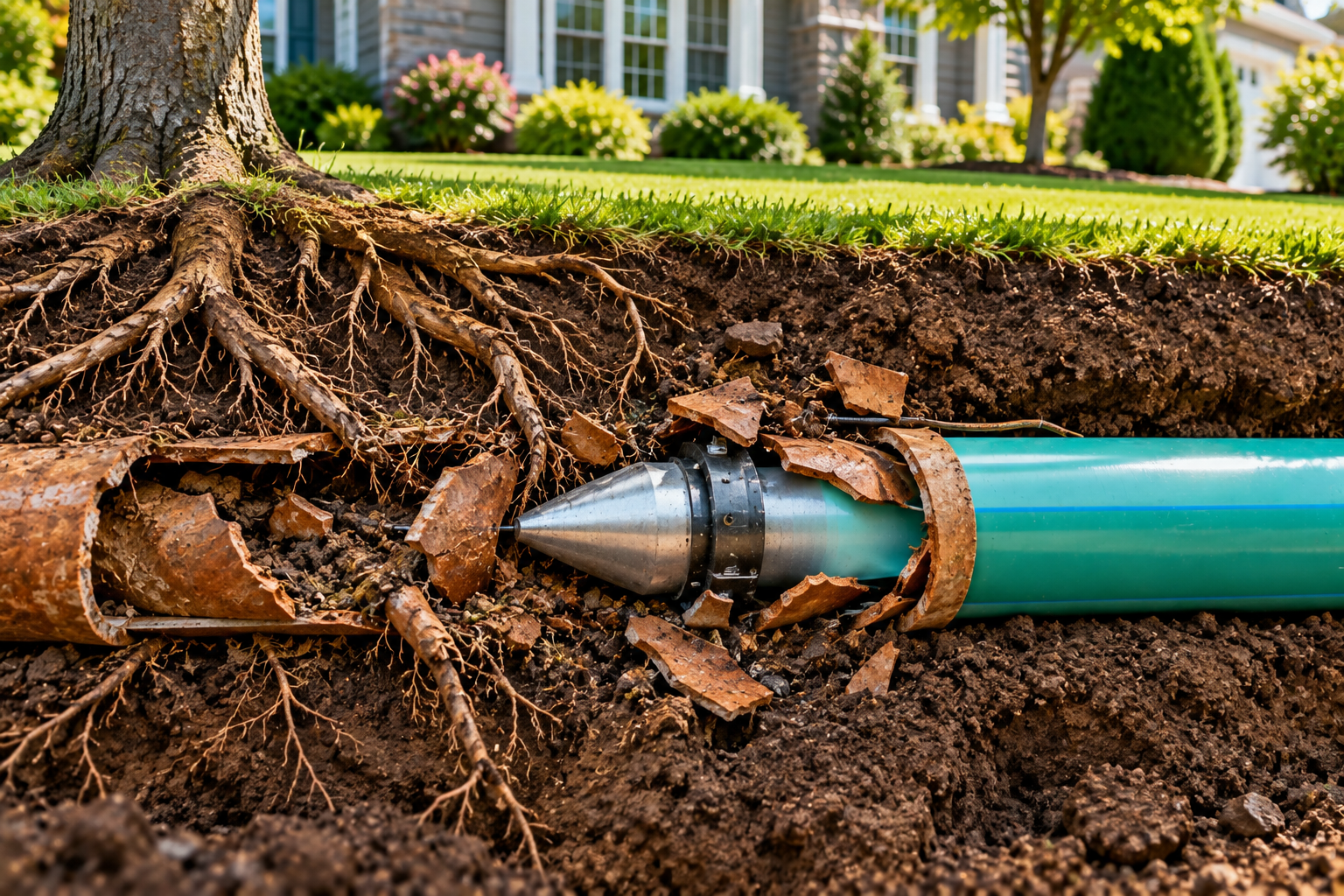
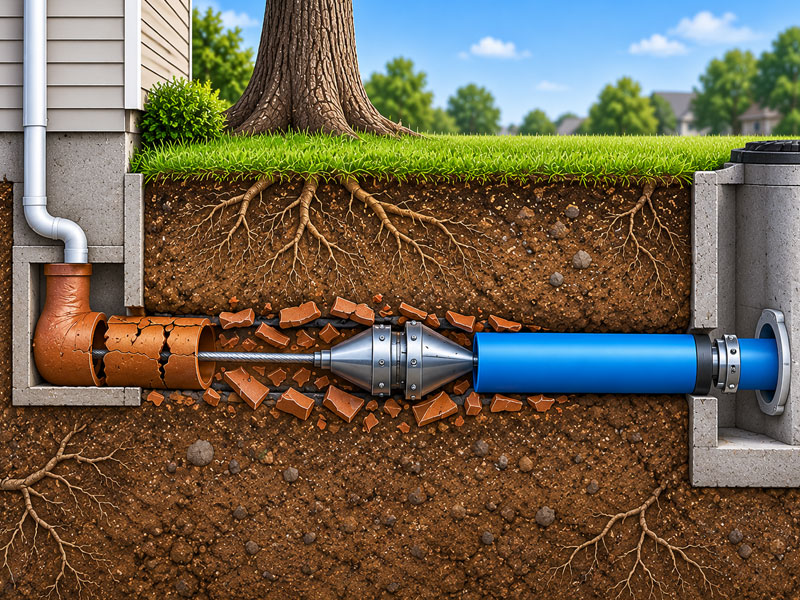
In this process, a specialized bursting head is pulled through the existing damaged pipe. As it moves forward, it fractures the old pipe outward into the surrounding soil. At the same time, a new pipe is pulled into place behind the bursting head.
This method is commonly used for:
- Residential sewer lines
- Main lateral sewer connections
- Aging clay, cast iron, Orangeburg, or brittle PVC pipes
For many homeowners, this form of trenchless pipe replacement offers a way to replace a failed line while reducing damage to the surface above.
How Pipe Bursting Works
Understanding the process helps homeowners know what to expect before work begins.
1. Inspection and Evaluation
Before replacement begins, technicians usually inspect the sewer line with a camera. This helps identify:
- Pipe material
- Location of breaks or collapse
- Diameter of the existing line
- Accessibility at both ends of the pipe
Not every damaged line is suitable for pipe bursting. A professional assessment determines whether the existing alignment can support the process.
2. Access Pits Are Created
Unlike traditional excavation, pipe bursting typically requires only two access points:
- An entry pit
- An exit pit
These pits allow equipment to access the damaged line without trenching across the entire yard.
3. Bursting Head Pulls Through the Existing Pipe
A hydraulic machine pulls a bursting head through the old pipe.
As it travels:
- The old pipe breaks apart
- The surrounding soil shifts outward
- The new pipe follows immediately behind
This creates a full sewer pipe replacement without removing the old pipe piece by piece.
4. Connection and Testing
After installation, the new pipe is connected to the home and municipal sewer system. Testing confirms proper flow, grade, and leak-free performance.
When Is Pipe Bursting a Good Choice?
Pipe bursting is not automatically the best solution in every situation, but it can be highly effective under the right conditions.
Pipe Bursting Often Makes Sense When:
The Existing Sewer Pipe Is Severely Damaged
If the line has major cracks, root intrusion, corrosion, or repeated failures, replacement may be more practical than repeated spot repairs.
The Pipe Needs Full Replacement
Unlike pipe lining, which restores the inside of an existing pipe, pipe bursting installs an entirely new pipe.
The Property Surface Needs Protection
For homes with expensive landscaping, concrete driveways, patios, or finished lawns, minimizing excavation is often a major factor.
A Larger Pipe Diameter Is Needed
In many cases, the pipe bursting sewer method can also allow upsizing the pipe diameter during replacement.
When Pipe Bursting May Not Be Ideal
Although effective, pipe bursting has limits.
Situations Where Other Methods May Be Better
The Existing Pipe Has Completely Collapsed
If the line is severely crushed or offset, pulling equipment through it may not be possible.
There Are Nearby Utilities
Dense underground utility areas may require careful review before bursting is approved.
The Pipe Alignment Is Poor
Sharp bends or unusual layouts may make other underground pipe replacement methods more suitable.
In these cases, another trenchless method or selective excavation may be recommended.
Pipe Bursting vs Traditional Sewer Pipe Replacement
Homeowners often compare trenchless solutions against conventional excavation.
Traditional Excavation
Traditional sewer pipe replacement typically involves digging a trench along the full length of the line.
Potential Drawbacks
- Greater landscape disruption
- Driveway or sidewalk removal
- Longer restoration work
- More visible impact on the property
Pipe Bursting
The pipe bursting sewer method minimizes those issues because most of the work happens underground.
Potential Benefits
- Less surface damage
- Faster installation in many cases
- Reduced restoration needs
- Full pipe replacement rather than patching
That does not always mean trenchless is cheaper upfront, but total project cost can be more favorable once restoration is considered.
Pipe Bursting vs Pipe Lining
Homeowners sometimes confuse pipe bursting with cured-in-place pipe lining.
Pipe Lining
Pipe lining creates a new inner layer inside the old pipe.
It is often useful when the existing pipe still has enough structural integrity.
Pipe Bursting
Pipe bursting physically destroys the old pipe and replaces it entirely.
Key Difference
If the existing line is too damaged for rehabilitation, trenchless pipe replacement through bursting may be the better option.
What Materials Are Used in Trenchless Pipe Replacement?
The replacement pipe used in bursting projects is commonly high-density polyethylene, often called HDPE.
Why HDPE Is Common
Strong and Flexible
It resists cracking and handles minor soil movement better than brittle materials.
Fewer Joint Failures
HDPE can be fused into continuous lengths, reducing root intrusion risk.
Long Service Life
When properly installed, it can last for decades.
This makes it a common choice for underground pipe replacement in residential settings.
What Does Pipe Bursting Cost?
One of the most common homeowner questions involves pipe bursting cost.
The price depends on several factors, so exact pricing varies by property.
What Affects Pipe Bursting Cost?
Length of the Sewer Line
Longer lines require more material, labor, and equipment time.
Pipe Depth
Deeper lines increase excavation complexity.
Soil Conditions
Rocky or unstable soil can affect difficulty.
Accessibility
Tight spaces or limited access may require additional preparation.
Restoration Requirements
Minimal restoration often helps offset trenchless installation costs.
Typical Cost Range
In many residential projects, pipe bursting cost may fall within a range similar to or slightly higher than traditional excavation on the installation side.
However, once landscaping, hardscape repair, and surface restoration are added, total project cost may become more competitive.
For homeowners, the real comparison should not only focus on installation price but also on the overall impact to the property.
How Long Does Pipe Bursting Take?
Timeframes depend on the site, but many residential projects can often be completed in one to two days.
Why It Can Be Faster
Because only access pits are excavated, much less time is spent on:
- Full trench digging
- Hauling away soil
- Surface reconstruction
That said, inspection, permitting, utility locating, and final restoration can affect the overall project schedule.
Signs You May Need Sewer Pipe Replacement
Many homeowners delay action because the signs start small.
Common Warning Signs
Frequent Drain Backups
Repeated backups in multiple fixtures can indicate a main line issue.
Persistent Sewer Odors
Ongoing odors around the yard or basement may point to leaks.
Slow Drains Throughout the House
When several drains are affected at once, the issue may be in the main sewer lateral.
Wet Areas in the Yard
Unexpected soft or soggy patches can indicate underground leakage.
If these problems are recurring, a camera inspection can help determine whether repair or full sewer pipe replacement is more appropriate.
In some local cases, homeowners searching for sewer lateral repair Milwaukee services often begin with these same symptoms.
Questions Homeowners Should Ask Before Choosing Pipe Bursting
Before moving forward with a project, it helps to ask detailed technical questions.
Important Questions to Ask
Is the Existing Pipe Suitable for Bursting?
Not every damaged pipe can be replaced using this method.
Will the Pipe Diameter Change?
Upsizing may be possible depending on the project.
What Surface Areas Will Be Disturbed?
Even trenchless methods still require access pits.
What Is Included in the Quote?
Clarify whether pricing includes:
- Inspection
- Permits
- Replacement pipe
- Reconnection
- Surface restoration
These details matter when comparing pipe bursting cost against other options.
How to Decide Between Repair and Replacement
Not every sewer problem requires complete replacement.
Repair May Make Sense When
- Damage is isolated
- The pipe is structurally sound overall
- Problems are recent and limited
Replacement May Make More Sense When
- Backups keep returning
- Multiple sections are failing
- The pipe material is outdated
- The line has reached the end of its service life
For aging systems, full underground pipe replacement may reduce the risk of repeated future repairs.
Conclusion
For homeowners dealing with recurring sewer issues, understanding the pipe bursting sewer method can make decision-making more practical.
Pipe bursting offers a way to complete full trenchless pipe replacement with less disruption than traditional excavation. It can be especially useful when the existing line is heavily damaged, when surface preservation matters, or when long-term performance is the main goal.
Every property is different, and the right solution depends on pipe condition, access, soil conditions, and total project scope. A professional inspection is usually the best starting point before deciding between repair and full replacement.
When homeowners are evaluating sewer pipe replacement options, the most useful approach is to compare long-term performance, restoration impact, and total project cost, not just installation price. That is where informed planning becomes more valuable than assumptions, which is a practical approach for any property owner working with Subterranean.
Frequently asked questions
Is pipe bursting better than traditional sewer replacement?
It depends on the property and pipe condition. The pipe bursting sewer method often reduces surface disruption, but it is not suitable for every line.
How long does a pipe bursting sewer line last?
A properly installed HDPE replacement pipe can often last several decades.
Can pipe bursting replace a collapsed sewer pipe?
Sometimes, but not always. A severely collapsed or misaligned pipe may require a different approach.
Does pipe bursting damage landscaping?
It usually causes much less disruption than traditional trench excavation, though access pits are still required.
Is pipe bursting more expensive?
The upfront pipe bursting cost can vary, but reduced restoration expenses can make total costs competitive.
What is the difference between pipe bursting and pipe lining?
Pipe lining rehabilitates the inside of the existing pipe. Pipe bursting destroys the old pipe and installs a completely new one.
When should I consider sewer lateral repair Milwaukee services?
If you notice recurring backups, slow drains throughout the house, or unexplained sewer odors, an inspection may help determine whether repair or replacement is needed.
Related Posts