How can I avoid expensive drain repairs? This guide covers simple habits and the value of pro drain cleaning to prevent costly issues. Contact us for pre...
Can Pipe Bursting Fix A Collapsed Sewer Line?
 A collapsed sewer line is one of the most serious plumbing emergencies a homeowner can face, leading to backups, property damage, and health hazards. When confronted with this stressful situation, the primary concern is finding an effective and efficient solution. For many, a critical question arises: can pipe bursting fix a collapsed sewer line? In many cases, the answer is a resounding yes. However, the suitability of this powerful trenchless method depends on the specific nature of the collapse and the condition of the existing pipe. This guide will explore the details, helping you understand when pipe bursting is the ideal fix.
What Exactly Is a Collapsed Sewer Line?
A collapsed sewer line means the pipe has caved in on itself, creating a partial or complete blockage that prevents wastewater from flowing away from your home. This is a structural failure, far more severe than a simple clog. Consequently, it requires a comprehensive repair, not just a cleaning service. Understanding the cause is the first step toward a solution.
Several factors can lead to a pipe collapse. For example, older pipes made of materials like clay or cast iron can simply degrade over decades. Furthermore, invasive tree roots can wrap around and crush pipes, and shifting soil or heavy loads from above (like driveway traffic) can exert enough pressure to cause a failure. The specific cause often influences the best repair strategy.
- Material Degradation: Older pipes made of clay, cast iron, or Orangeburg can become brittle and break down over time.
- Tree Root Intrusion: This is a leading cause, as roots seek water and can penetrate and eventually shatter pipes.
- Soil Shifting: Changes in the surrounding soil due to freeze-thaw cycles, erosion, or nearby construction can put immense pressure on the line.
- Heavy Loads: Pipes located under driveways, patios, or heavy equipment can be crushed over time.
How Does the Pipe Bursting Process Work?
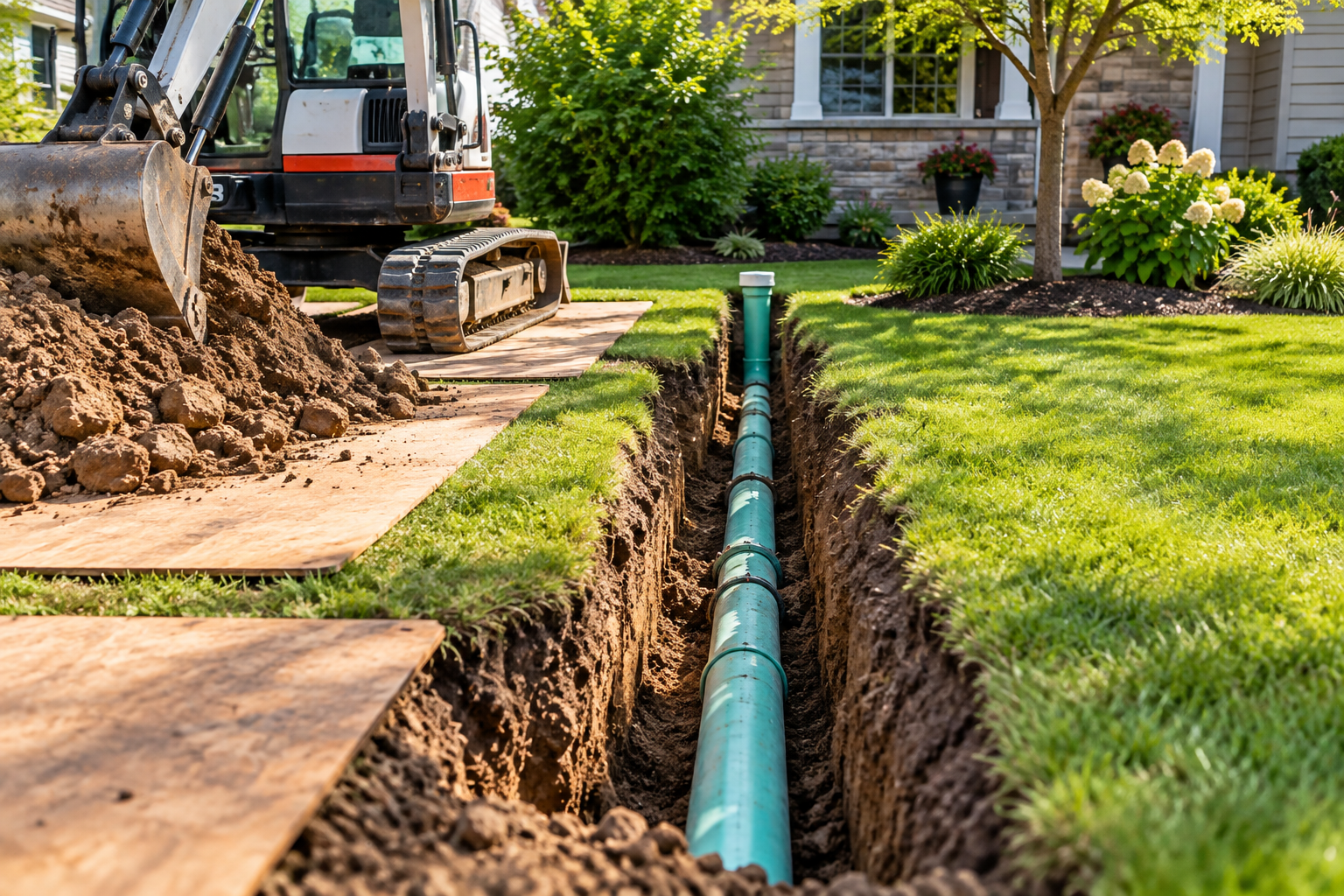
Pipe bursting is a trenchless sewer replacement technique that avoids the need for extensive digging. Instead of excavating the entire length of the old pipe, technicians dig two small access points at either end of the damaged section. The process is remarkably efficient and minimizes disruption to your property.
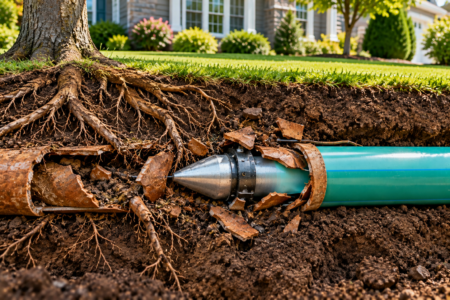
The core of the method involves pulling a new, high-density polyethylene (HDPE) pipe through the old, damaged line. A specialized ‘bursting head’ is attached to the front of the new pipe. As this assembly is pulled through, the bursting head fractures the old pipe outward into the surrounding soil, creating a channel for the new pipe to occupy simultaneously. Importantly, this process is detailed in our guide on how pipe bursting works, which provides a step-by-step overview.
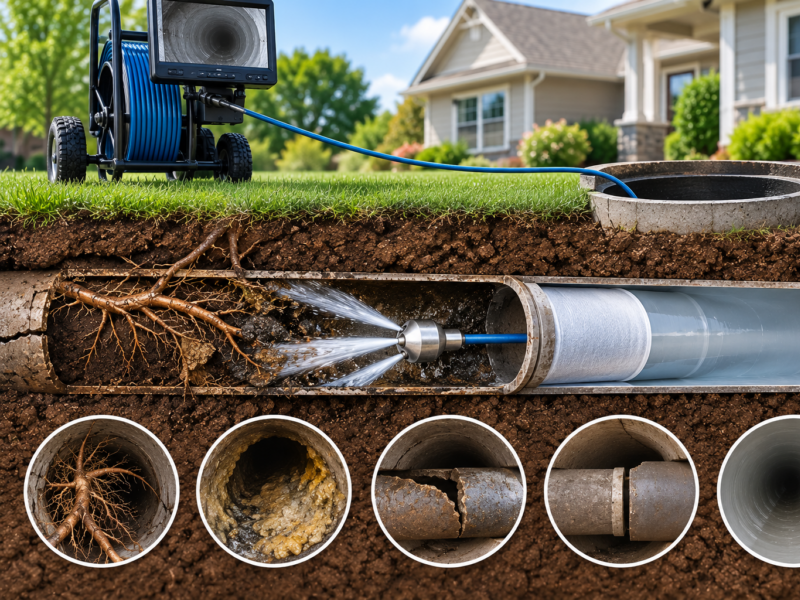
- Camera Inspection: First, a technician performs a thorough video inspection to assess the damage and confirm if pipe bursting is viable.
- Access Creation: Two small pits are excavated at the start and end of the sewer line section being replaced.
- Cable Insertion: A heavy-duty cable is fed through the old pipe, from the exit pit to the entry pit.
- Bursting and Replacement: The bursting head and new HDPE pipe are attached to the cable at the entry pit. A powerful hydraulic system at the exit pit pulls the entire assembly through, breaking the old pipe and installing the new one in a single action.
- Final Connections: Once the new pipe is in place, it is connected to the existing sewer system, and the access pits are backfilled.
The Big Question: Can Pipe Bursting Fix a Collapsed Sewer Line?
Now for the direct answer. Yes, pipe bursting is specifically designed to handle severely damaged and collapsed pipes. Unlike other methods that may only work on cracks or minor damage, pipe bursting physically displaces and destroys the old pipe. Therefore, it is an excellent solution for lines that have caved in due to root intrusion, fractures, or age-related degradation.
When is Pipe Bursting the Ideal Solution?
This method excels under specific conditions. For instance, if your pipe is made of a frangible material like clay, cast iron, or concrete, the bursting head can easily break it apart. Additionally, it’s a great choice when the original pipe’s path is still relatively intact, even if the pipe itself is crushed. A professional sewer camera inspection is essential to verify this. Pipe bursting also offers the unique advantage of being able to upsize the sewer line, which can improve flow capacity—something other trenchless methods cannot do.
What are the Limitations of Pipe Bursting?
However, there are scenarios where pipe bursting is not the right choice. If a section of the pipe has completely disintegrated or been washed away, there is no host pipe for the bursting head to follow. Similarly, pipe bursting follows the path of the old line, so it cannot correct significant sags or ‘bellies’ where water pools. A line with multiple sharp bends can also pose a challenge for the equipment. In these rare cases, other repair options may be necessary.
Advantages Over Traditional Excavation
When it is a viable option, the pipe bursting method offers significant advantages over digging a long trench across your yard. The most obvious benefit is the preservation of your landscaping, driveway, and other surface structures. Because it requires only two small pits, the restoration work is minimal.
Furthermore, the process is much faster, often completed in a single day, whereas traditional excavation can take several days or more. The new HDPE pipe installed is also a major upgrade. It is a seamless, flexible material that is highly resistant to root intrusion and corrosion, offering a long-term solution with a lifespan of 50 years or more. This durability is a key reason trenchless technologies are recommended by industry groups like the North American Society for Trenchless Technology (NASTT).
Final Thoughts: Your Next Steps for a Collapsed Sewer Line
In conclusion, the answer to the question, ‘can pipe bursting fix a collapsed sewer line?‘ is a conditional but frequent ‘yes.’ It is a highly effective, minimally invasive, and durable solution for many collapse scenarios, particularly those caused by fractures and root damage in pipes that still have a clear path. It stands as a superior alternative to the disruption and expense of traditional excavation.
Ultimately, the only way to determine the perfect solution for your specific problem is through a professional diagnosis. A video camera inspection will reveal the exact condition, location, and cause of the collapse, allowing a qualified technician to recommend the most effective course of action, whether it’s pipe bursting, lining, or another approach. If you suspect you have a collapsed sewer line, don’t wait for the problem to worsen. Contact a professional for an expert assessment and reclaim your peace of mind. Learn more about potential sewer repair costs to prepare for your project.
Related Posts