How can I avoid expensive drain repairs? This guide covers simple habits and the value of pro drain cleaning to prevent costly issues. Contact us for pre...
What Sewer Problems Can Be Fixed Without Excavation?
 Facing a sewer line issue often brings to mind images of a torn-up lawn, heavy machinery, and a lengthy, expensive repair process. However, modern plumbing technology has evolved significantly, raising a crucial question for homeowners: what sewer problems can be fixed without excavation? Fortunately, the answer is quite a few. Trenchless repair methods offer powerful, minimally invasive solutions that can resolve many common sewer pipe issues without destroying your landscaping. This guide explores the specific problems that can be addressed with these advanced techniques.
Understanding Trenchless Sewer Repair
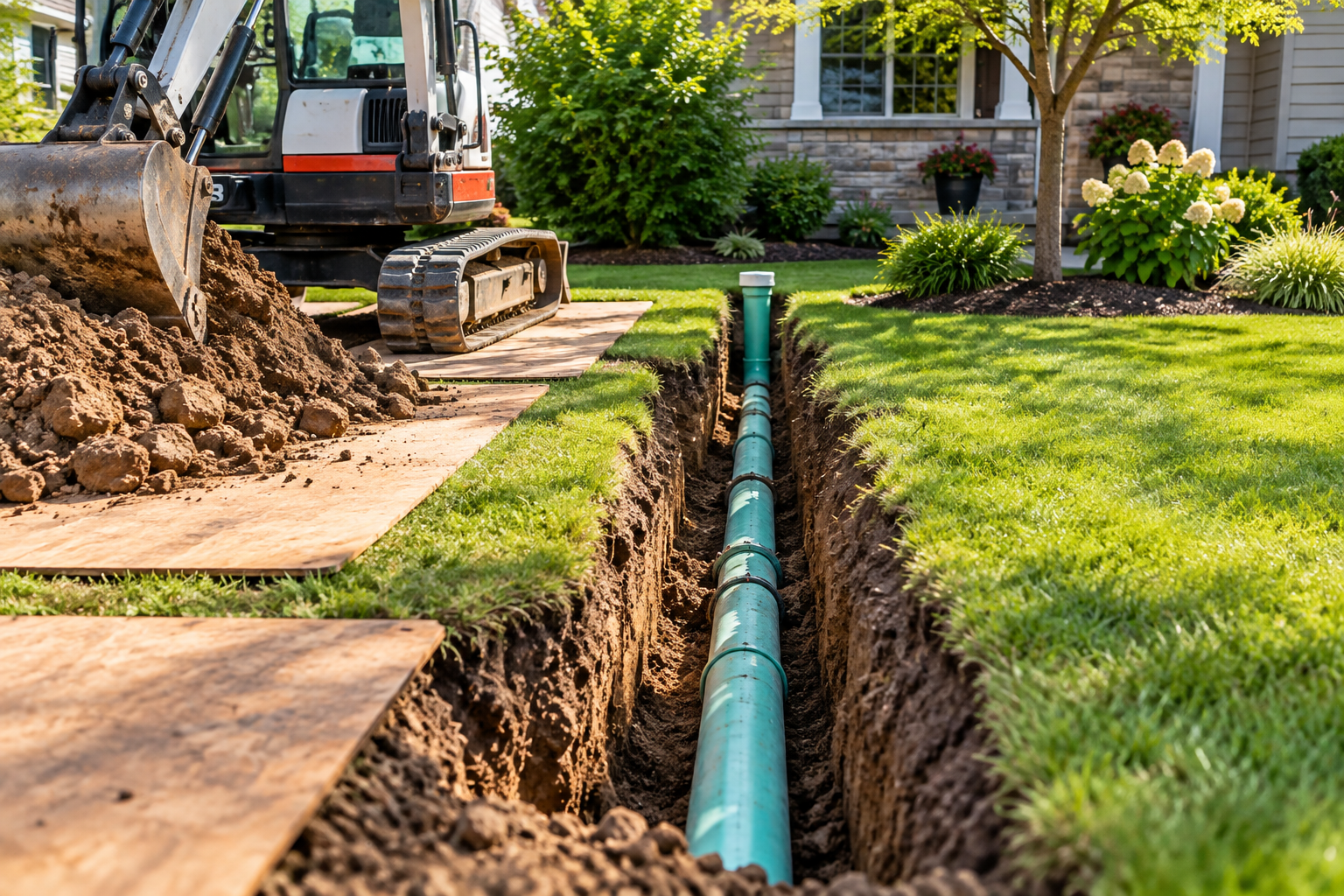
Before diving into specific problems, it’s essential to understand what trenchless repair entails. Unlike traditional methods that require digging a large trench to access the entire length of the damaged pipe, trenchless technology works from small access points, often at the beginning and end of the line. Consequently, this approach is faster, less disruptive, and often more cost-effective than conventional excavation. The first step in any repair is always a thorough sewer camera inspection, which allows a professional to accurately diagnose the problem and determine if a no-dig solution is viable.
What Sewer Problems Can Be Fixed Without Excavation?
Trenchless methods are versatile and can handle a wide range of issues that once required major digging. These techniques essentially create a new, durable pipe inside the old one or replace it without a trench. Therefore, they are highly effective for addressing problems related to the pipe’s structural integrity and flow capacity.
Common Issues Solved by No-Dig Methods
Here are the primary sewer problems that are excellent candidates for trenchless solutions:
- Pipe Cracks and Fractures: Minor to moderate cracks caused by soil shifting, temperature changes, or age can be perfectly sealed with trenchless pipe lining. The new liner creates a seamless, joint-free barrier that prevents leaks and stops the cracks from worsening.
- Tree Root Intrusion: This is one of the most common sewer problems. Initially, a high-pressure cleaning method called Hydro-jetting is used to blast away the invasive roots. Afterward, a CIPP liner is installed to create an impenetrable barrier that roots cannot break through again.
- Corrosion and Deterioration: Older cast iron or galvanized steel pipes are prone to corrosion over time, leading to rough surfaces that snag waste and cause blockages. A new liner covers the corroded interior, creating a smooth, durable surface that restores flow and prevents further decay.
- Persistent Blockages: While some clogs can be snaked, severe or recurring blockages caused by grease buildup, scale, or debris can be completely scoured away with hydro-jetting. This prepares the pipe for lining, ensuring a long-term fix.
- Misaligned Pipe Sections: Minor offsets or gaps between pipe joints can often be bridged with a structural pipe liner. The liner creates a continuous pipe, smoothing over the faulty connection and preventing soil and water from infiltrating the line.
Key Trenchless Repair Techniques Explained
Two primary methods dominate the trenchless repair landscape, each suited for different situations. Both are recognized by industry leaders like the National Association of Sewer Service Companies (NASSCO) as reliable repair options.
Cured-in-Place Pipe (CIPP) Lining
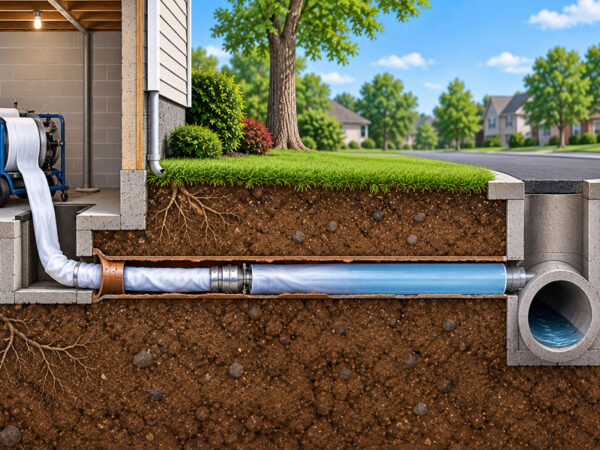
CIPP lining is the most widely used trenchless technique. The process involves saturating a flexible felt liner with a special epoxy resin. This liner is then inserted into the damaged pipe and inflated, pressing it against the walls of the host pipe. Finally, the resin is cured using hot water, steam, or UV light, hardening it into a rigid, seamless, and highly durable new pipe within the old one. This is a core component of modern trenchless sewer repair and is effective for most cracks, leaks, and root intrusion issues.
Pipe Bursting
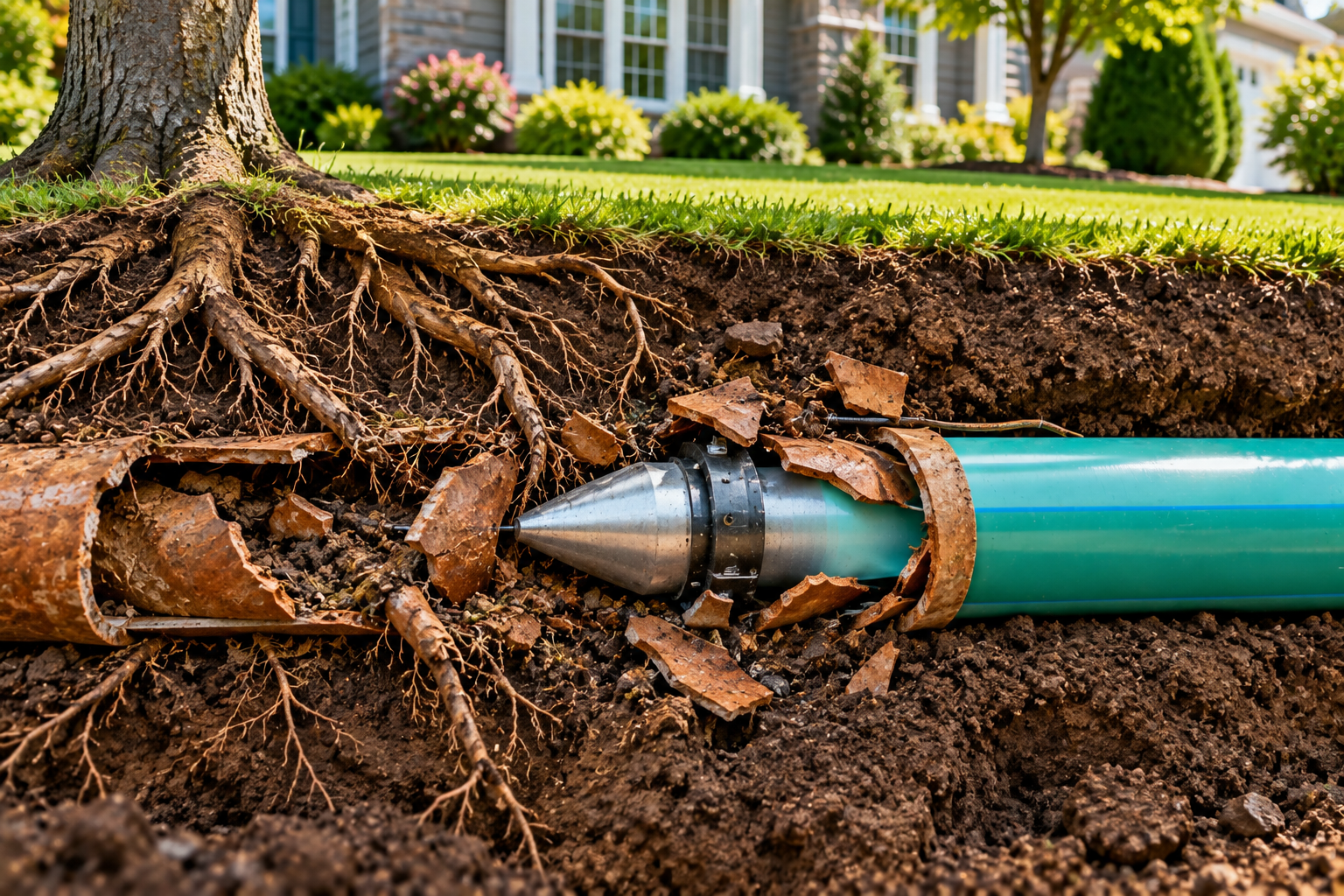
For pipes that are more severely damaged or have collapsed in sections, pipe bursting is the preferred method. In this process, a powerful hydraulic machine pulls a new, high-density polyethylene (HDPE) pipe through the old sewer line. A bursting head is attached to the front of the new pipe, which fractures the old, damaged pipe outward into the surrounding soil as it moves forward. This simultaneously destroys the old pipe and installs a brand-new one in its place, all without extensive digging.
When is Excavation Still Unavoidable?
While trenchless methods are incredibly effective, they cannot solve every problem. There are specific scenarios where traditional excavation remains the only viable option. For example, if a pipe is completely collapsed along a significant length, there is no path for a liner or bursting head to follow. Additionally, pipes with severe sags or ‘bellies’—where a section of the pipe has sunk—often require excavation to correct the grade and ensure proper flow. Understanding these limitations is crucial for setting realistic expectations for your sewer repair project, as outlined by environmental agencies like the EPA who oversee wastewater infrastructure.
Key Takeaways for Homeowners
The fear of a ruined yard should no longer be your first thought when a sewer issue arises. The answer to what sewer problems can be fixed without excavation? is broader than ever before. From cracks and root intrusion to general deterioration, trenchless technologies like CIPP lining and pipe bursting offer a robust, efficient, and less invasive alternative. These methods save your landscape, reduce repair time, and provide a long-lasting solution that is often more durable than the original pipe. If you are experiencing sewer backups or slow drains, the first step is a professional camera inspection to determine the exact cause and see if a no-dig repair is right for you. Contact a specialist today to explore your options.
Related Posts