How can I avoid expensive drain repairs? This guide covers simple habits and the value of pro drain cleaning to prevent costly issues. Contact us for pre...
How Does Trenchless Sewer Repair Work?
 Facing sewer line problems can be daunting, but understanding the solution doesn’t have to be. If you’re asking, ‘How does trenchless sewer repair work?‘, you’ve come to the right place. This modern approach fixes damaged pipes without the extensive excavation that traditional methods require, saving your lawn, driveway, and sanity. Essentially, it’s a way to repair or replace underground pipes through just one or two small access points, making it a highly efficient and less intrusive option for homeowners.
Furthermore, this technology addresses a wide range of common sewer issues, from cracks and leaks caused by tree roots to corrosion in older pipes. By avoiding large-scale digging, it preserves your property’s landscaping and hardscaping. Consequently, you can resolve serious plumbing problems faster and often more affordably than with conventional methods. This guide will walk you through the entire process, its benefits, and the different techniques involved.
What Are the Main Types of Trenchless Repair?
Trenchless technology is not a one-size-fits-all solution; instead, it encompasses several sophisticated methods. The two most common techniques used for residential properties are pipe lining and pipe bursting. The choice between them depends on the condition of the existing pipe and the specific problem that needs to be solved. For example, a partially collapsed pipe might require a different approach than one with minor cracks.
Pipe Lining (Cured-in-Place Pipe or CIPP)
Pipe lining, also known as Cured-in-Place Pipe (CIPP), is a rehabilitative technique that creates a new, seamless pipe within the old one. Technicians start by thoroughly cleaning the existing sewer line to remove debris and roots. Subsequently, a flexible, resin-saturated liner is inserted into the damaged pipe. Once in place, the liner is inflated, pressing it against the walls of the original pipe. The resin is then cured using heat, steam, or UV light, which hardens it into a smooth, durable, and corrosion-resistant new pipe. This method effectively seals cracks, stops leaks, and prevents future root intrusion.
Pipe Bursting
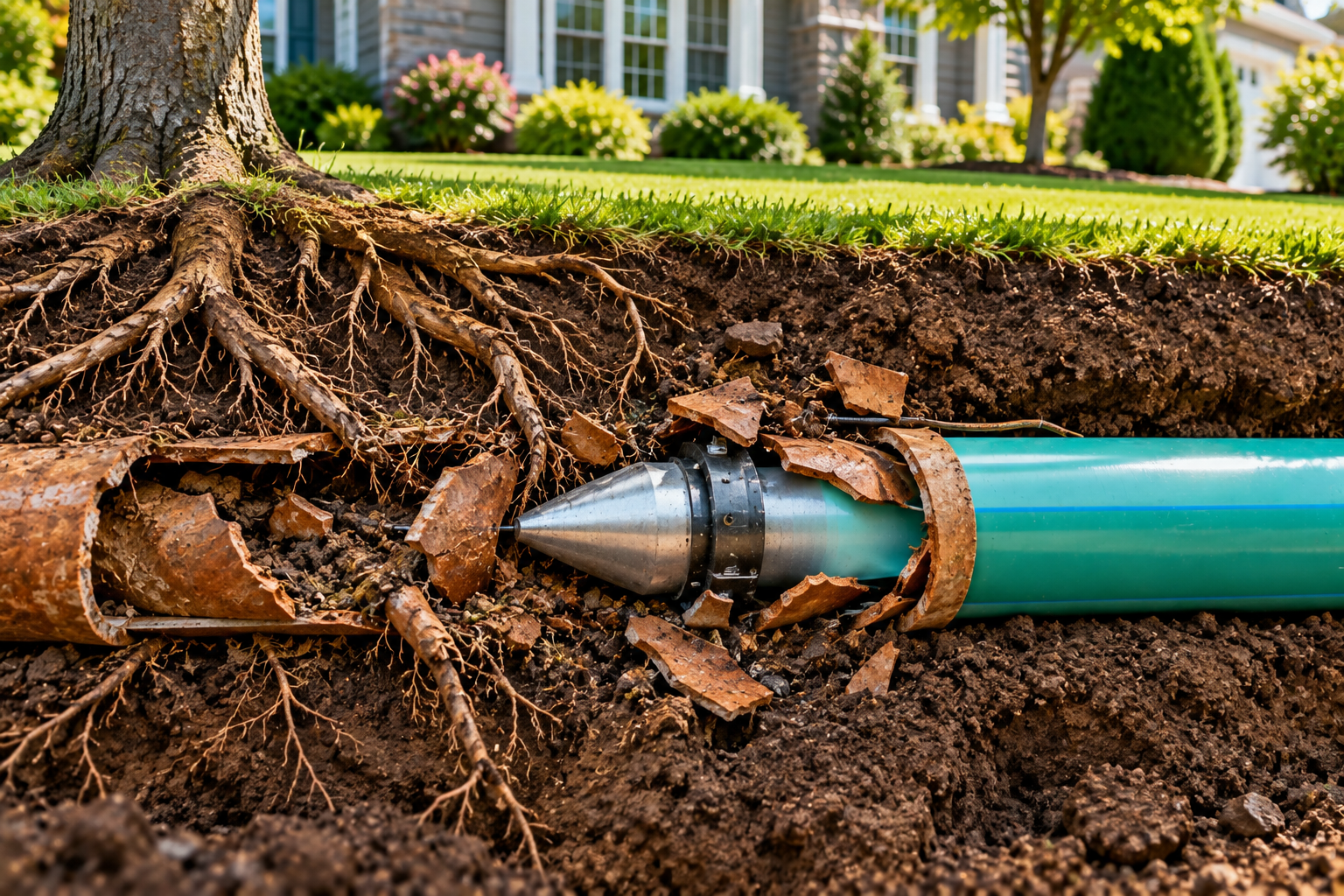
Pipe bursting is a replacement technique that, as the name suggests, breaks apart the old, damaged pipe while simultaneously pulling a new one into its place. This process is ideal for pipes that are too severely damaged or collapsed for lining. A powerful hydraulic machine pulls a new, high-density polyethylene (HDPE) pipe through the old one. Attached to the front of the new pipe is a ‘bursting head,’ which fractures the old pipe outward into the surrounding soil. The new pipe immediately takes its place, providing a brand-new sewer line. The pipe bursting method can even be used to increase the diameter of the sewer line, improving flow capacity.
Key Benefits: Why Homeowners Ask How Does Trenchless Sewer Repair Work?
The growing popularity of this technology is due to its significant advantages over traditional dig-and-replace methods. When homeowners understand the benefits, the choice becomes clear. Importantly, these advantages translate to savings in time, money, and stress.
- Minimal Property Disruption: Since trenchless repair requires only small access points, your lawn, garden, driveway, and patio remain intact. This eliminates the need for costly and time-consuming landscape restoration.
- Faster Project Completion: Most trenchless repairs can be completed in a single day, whereas traditional methods can take several days or even weeks. This means your plumbing is back to normal much faster.
- Cost-Effective Solution: While the upfront technology cost can be comparable, you save significantly on the indirect expenses of excavation and restoration. To get a better idea of the financial aspect, it’s helpful to understand the costs involved in sewer repair projects.
- Durable and Long-Lasting: The materials used in trenchless repair, such as epoxy liners and HDPE pipes, are highly durable and resistant to corrosion, abrasion, and root intrusion. These new pipes have a life expectancy of 50 years or more.
The Trenchless Repair Process: A Step-by-Step Look
While the specific details may vary, the general process for a trenchless project follows a clear and logical sequence. Each step is designed for maximum efficiency and minimal impact on your property. Understanding this workflow helps demystify the technology.
- Initial Diagnosis with a Camera: The first and most critical step is a thorough sewer camera inspection. A technician feeds a high-resolution camera into the pipe to pinpoint the exact location and nature of the problem, whether it’s cracks, blockages, or a full collapse.
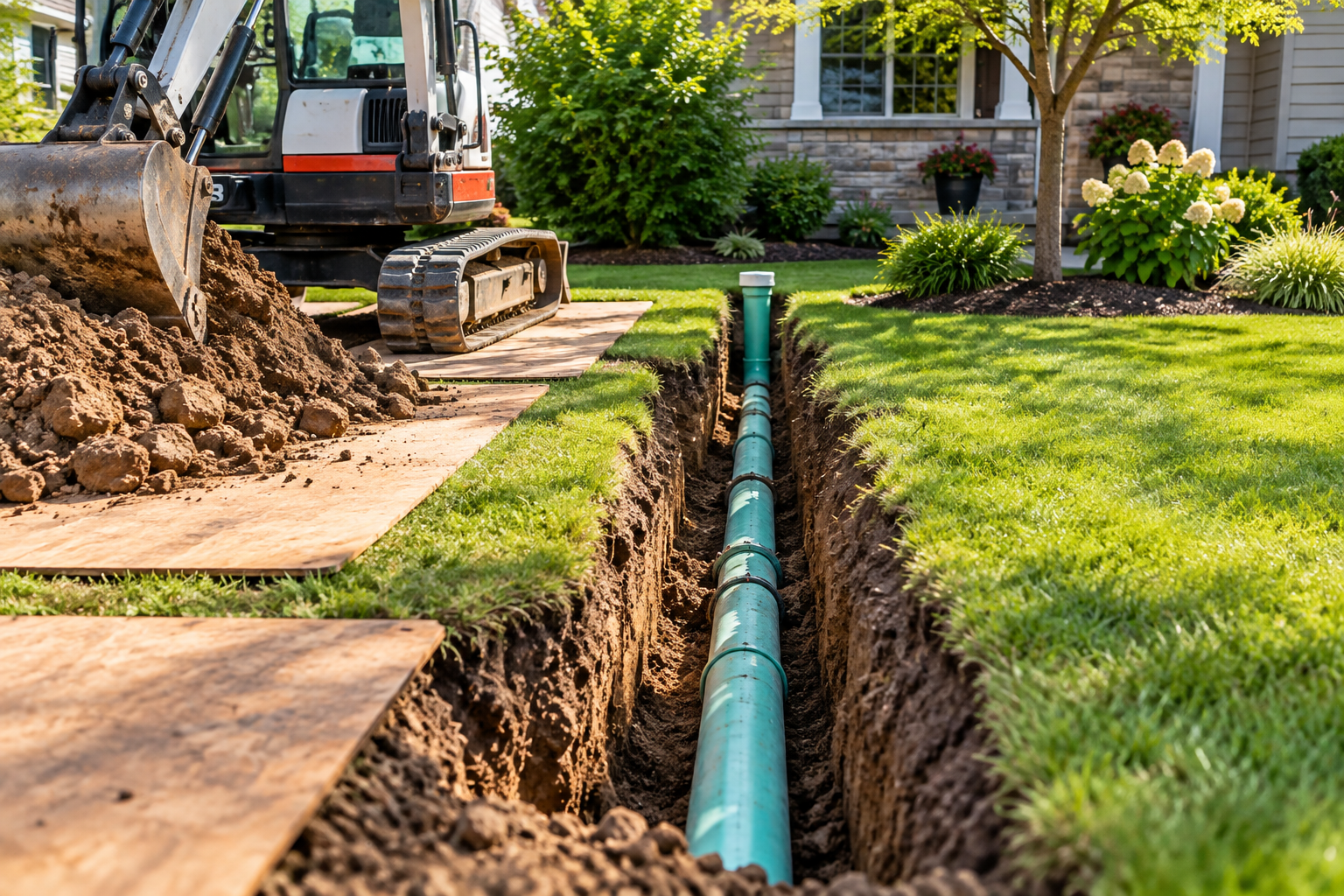
- Site Preparation: Based on the inspection, the team determines the best access points. Typically, this involves strategically digging one or two small pits to reach the ends of the damaged pipe section.
- Thorough Pipe Cleaning: Before any repair can begin, the existing pipe must be completely cleaned. Hydro jetting is often used to blast away roots, grease, and other debris, ensuring the liner or new pipe can be installed correctly.
- Repair or Replacement: At this stage, the chosen method—either CIPP lining or pipe bursting—is executed. The new pipe or liner is put into place, creating a fully restored sewer line.
- Final Inspection and Restoration: A final camera inspection is performed to verify the quality and success of the repair. Afterward, the small access pits are backfilled, leaving your property looking virtually untouched.
When is Trenchless Repair the Right Choice?
Trenchless methods are particularly advantageous in specific scenarios. For instance, if your damaged pipe runs under mature trees, extensive landscaping, a driveway, or a patio, digging would cause irreversible damage. In such cases, trenchless repair is the obvious solution. Similarly, for pipes located deep underground, the cost and complexity of excavation can be prohibitive. For these complex situations, understanding how does trenchless sewer repair work provides a clear path to a less invasive and highly effective solution. It is also an excellent choice for repairing pipes made of older materials like clay or cast iron that are prone to cracking and root intrusion, as noted by infrastructure experts like the U.S. Environmental Protection Agency.
Key Takeaways on Trenchless Sewer Repair
In summary, trenchless sewer repair is a revolutionary approach to fixing underground pipes. It relies on advanced techniques like pipe lining and pipe bursting to restore your sewer system without the destructive and costly process of excavation. The primary benefits include preserving your property, saving time and money, and installing a highly durable, long-lasting pipe. Ultimately, knowing how does trenchless sewer repair work empowers you to make an informed decision for your property. It represents a significant advancement in plumbing technology, offering a superior alternative to disruptive traditional repairs. If you are experiencing sewer problems, consider a trenchless solution for a modern, efficient, and effective fix. Contact a professional to see if this method is right for you.
Related Posts