How can I avoid expensive drain repairs? This guide covers simple habits and the value of pro drain cleaning to prevent costly issues. Contact us for pre...
How Do Tree Roots Get Into Sewer Pipes?
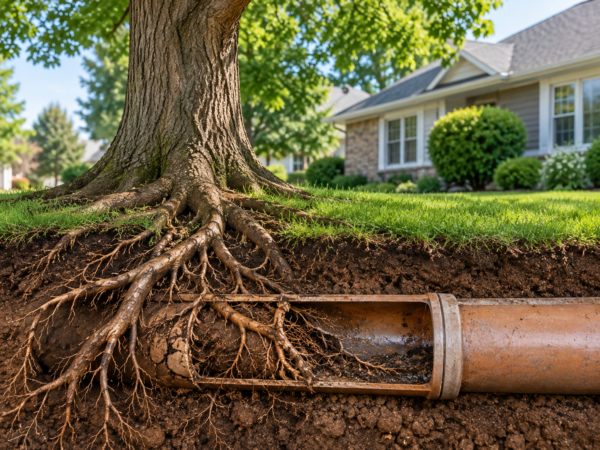 It’s a question many homeowners eventually face: how do tree roots get into sewer pipes? The answer lies in a tree’s natural survival instinct. Your sewer lines are a source of water, oxygen, and nutrients, making them an irresistible target for nearby tree roots. This process, known as root intrusion, starts subtly but can lead to significant blockages and costly damage if left unaddressed. Consequently, understanding the mechanism is the first step toward prevention.
The Science Behind How Do Tree Roots Get Into Sewer Pipes?
Tree roots don’t actively break into solid pipes. Instead, they are opportunistic, exploiting existing weaknesses. The process begins when tiny cracks, loose joints, or pinhole leaks in a sewer line release water vapor into the surrounding soil. Furthermore, roots have a biological ability to sense these gradients in moisture and will grow directly toward the source. Even a minuscule opening is large enough for a hair-like root tip to enter.
Once inside, the root finds a perfect environment. It has access to a constant supply of nutrient-rich water, allowing it to thrive and expand rapidly. As the primary root grows, it sends out a network of smaller roots, creating a dense mass that traps waste, toilet paper, and other debris. Eventually, this root ball can completely obstruct the flow of wastewater, leading to backups in your home. Therefore, the initial small leak becomes a major plumbing emergency.
Are Certain Pipe Materials More Vulnerable?
Yes, the material of your sewer pipes plays a significant role in their susceptibility to root intrusion. Older homes often have pipes made from materials that are more prone to degradation and leakage. For example:
- Clay Tile Pipes: Common in homes built before the 1980s, clay pipes are brittle and prone to cracking under pressure. Their numerous joints are also weak points that can loosen over time, creating easy entry for roots.
- Cast Iron Pipes: While durable, cast iron is susceptible to corrosion and rust. Over decades, this corrosion can create cracks and holes that roots can exploit.
- Orangeburg Pipes: Made of wood pulp and tar, these pipes are the most vulnerable and have a limited lifespan. They can deform and collapse, offering little resistance to root intrusion.
In contrast, modern PVC and ABS plastic pipes are more resistant. Their joints are solvent-welded and watertight, and the material itself is less prone to cracking, offering superior protection against root problems.
What Are the Telltale Signs of Tree Roots in Your Sewer Line?
Recognizing the early warning signs of root intrusion can save you from a messy and expensive situation. If you notice any of the following issues, it’s time to investigate. Importantly, these symptoms often start small and worsen over time.
- Slow Drains: If multiple drains in your home, particularly on the lowest level, are draining slowly, it’s a classic sign of a main sewer line obstruction.
- Gurgling Sounds: When you flush a toilet or use a sink, do you hear gurgling noises from other drains? This indicates that air is being trapped in the system by a blockage and is struggling to escape.
- Frequent Backups: A single clog is one thing, but if you’re experiencing recurring sewer backups in your basement or ground-floor bathrooms, roots are a likely culprit.
- Unusual Yard Features: A specific patch of grass over your sewer line that is unusually green and lush could be getting extra ‘fertilizer’ from a leaking pipe. Similarly, a sinkhole or soft, damp spot in the yard is a major red flag.
- Foul Odors: Unexplained sewer gas smells inside or outside your home suggest that the line is not sealed properly and may have been compromised by roots.
Confirming and Resolving Root Intrusion
If you suspect you have a root problem, a professional diagnosis is essential. The most effective method is a sewer camera inspection. During this process, a technician feeds a high-resolution camera into your sewer line to get a real-time view of its condition. This definitively confirms the presence, location, and severity of the root intrusion.
Once confirmed, there are several methods for removal. For minor clogs, a mechanical auger or ‘snake’ can cut through the roots. However, for more significant blockages, hydro jetting is a far more effective solution. This technique uses high-pressure water jets to scour the inside of the pipe, completely removing all roots and debris. This not only clears the blockage but also cleans the pipe walls, making it harder for roots to re-establish themselves quickly. Knowing exactly how do tree roots get into sewer pipes helps professionals choose the right tool for the job.
Long-Term Solutions for Preventing Root Problems
Clearing roots is only a temporary fix if the underlying cracks in the pipe remain. To prevent roots from returning, you must address the entry points. Fortunately, modern technology offers several long-term solutions that don’t require extensive excavation.
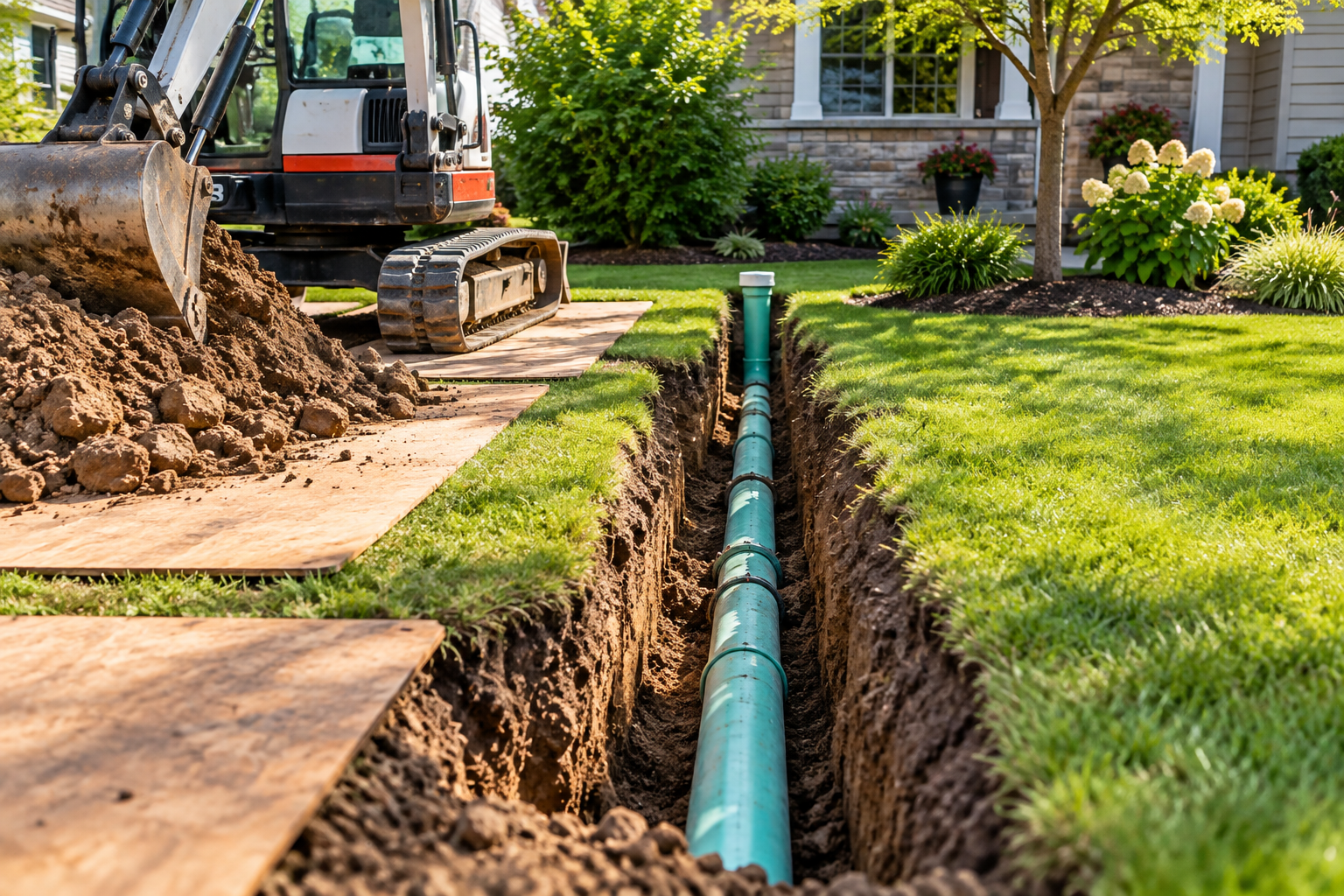
Trenchless Pipe Repair
Trenchless methods are a game-changer for sewer line repair. Instead of digging up your yard, these techniques repair the pipe from the inside. Two popular options include:
- Cured-in-Place Pipe (CIPP) Lining: A flexible, resin-saturated liner is inserted into the old pipe and inflated. The resin then cures, creating a new, seamless, and durable pipe within the old one. This seals all cracks and joints, making future root intrusion impossible. To learn more, explore how trenchless sewer repair works.
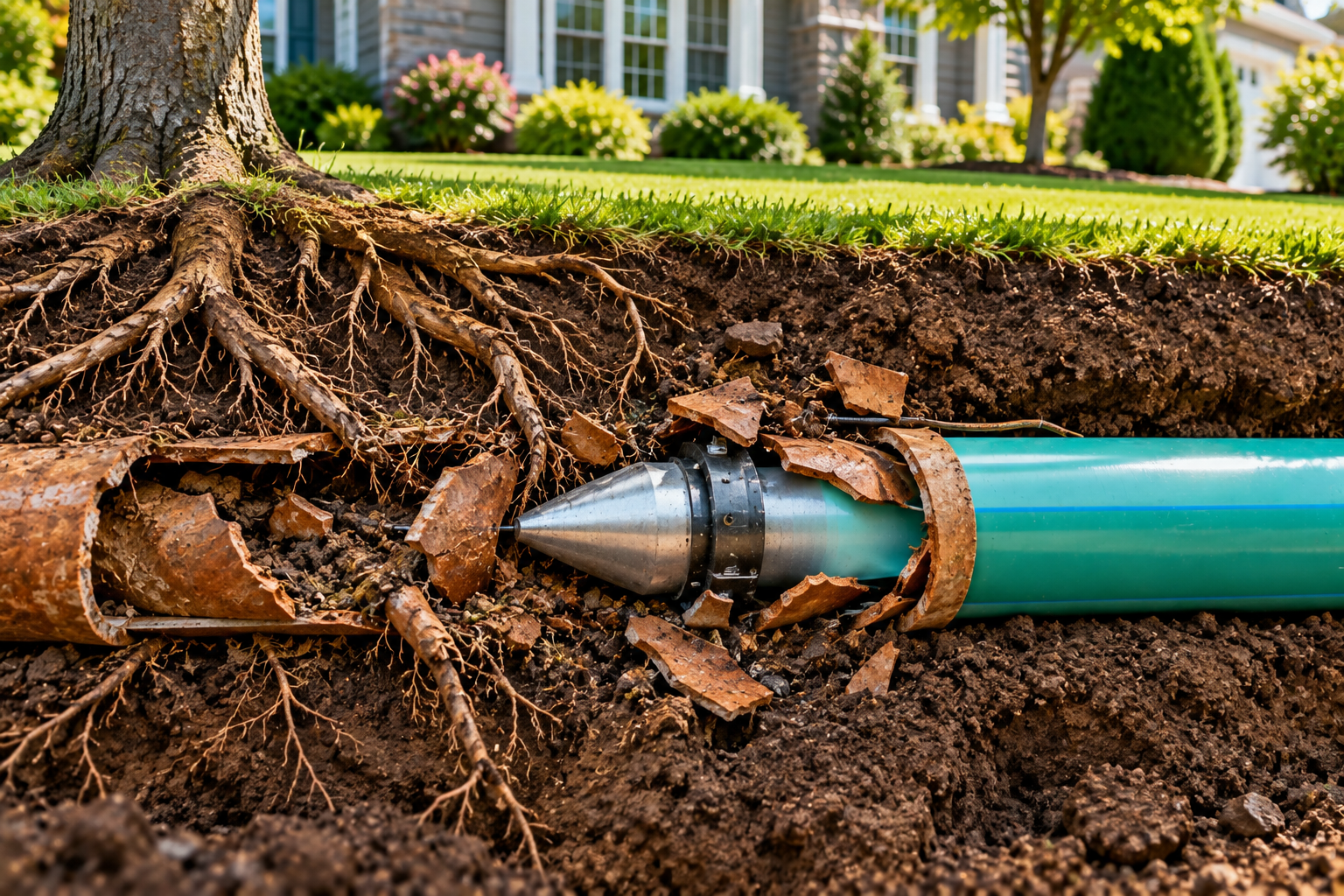
- Pipe Bursting: In this method, a new pipe is pulled through the old one while simultaneously fracturing the old pipe outward. This effectively replaces the damaged line with a brand-new, seamless pipe. It’s an excellent option for severely damaged or collapsed lines, as detailed in this pipe bursting homeowner guide.
These methods provide a permanent solution to the question of how tree roots get into sewer pipes by eliminating the possibility entirely.
Final Thoughts: Protecting Your Sewer System
Tree root intrusion is a powerful natural process that can wreak havoc on a home’s plumbing system. The attraction to water vapor from even the smallest pipe defect is all it takes for a problem to begin. By recognizing the signs—slow drains, gurgling sounds, and frequent backups—you can act before a major backup occurs. While methods like hydro-jetting can clear existing blockages, the most reliable long-term strategy is to repair the pipe itself, often with trenchless solutions like CIPP lining or pipe bursting. As an authoritative source like Purdue University Extension notes, managing the problem requires a multi-faceted approach. If you suspect roots are compromising your sewer line, don’t wait. Contact a professional for an inspection and protect your property from costly damage.
Related Posts